

How to Choose the Right Brick Force Welding Machine for Your Building Projects
Category:Blog
Author:
Source:
Add time:2025-10-27 11:21
1. Introduction – Tackling the Universal Challenges of Construction
Every construction company today faces the same three pressures: tight project deadlines, strict quality standards, and shrinking profit margins.
In this competitive environment, Brick Force mesh plays a critical role in masonry reinforcement — its welding quality directly determines the durability and strength of every wall you build.
That’s why choosing the right Brick Force welding machine is not just about buying a piece of equipment; it’s about securing the foundation of your productivity, reputation, and long-term profitability.
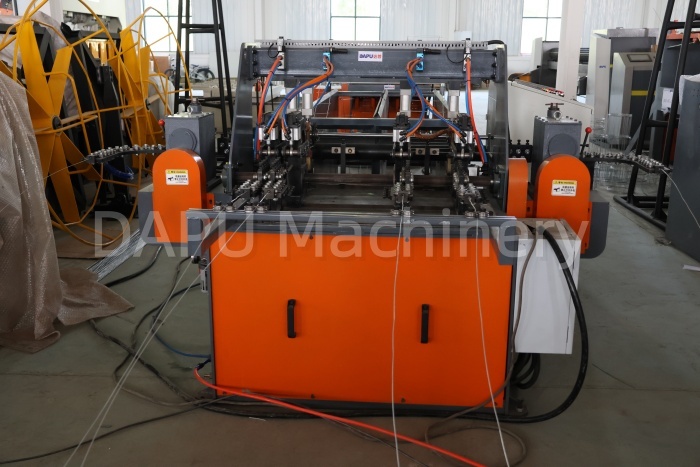
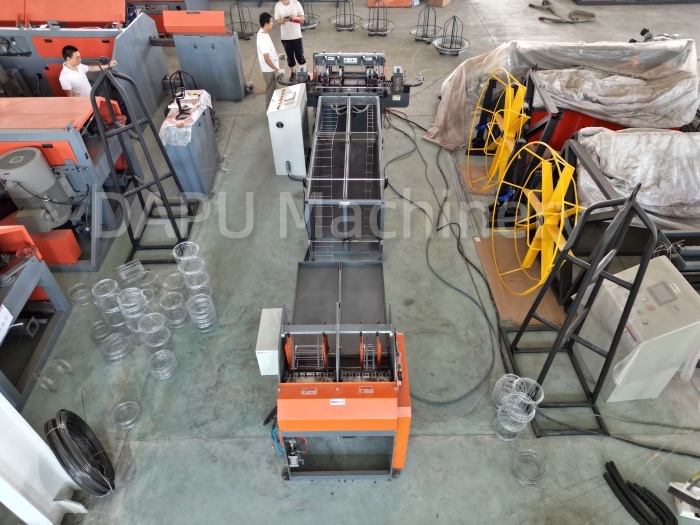
Unfortunately, many manufacturers fall into the same traps when choosing machinery:
- Focusing only on the initial purchase price, ignoring long-term operating costs.
- Losing valuable production time due to frequent breakdowns or long service delays.
- Facing poor technical support, which slows down production and delivery.
This expert guide will help you look beyond simple price comparison and evaluate your purchase from a total cost of ownership (TCO) perspective — empowering you to choose a Brick Force welding machine that continues generating profit throughout its service life.
2. Self-Assessment: Five Essential Questions Before You Buy
Before investing in any welding line, it’s vital to perform a clear self-diagnosis. Ask yourself these five key questions:
1. What’s your production scale and output requirement?
Are you supplying large-scale infrastructure projects or serving small to medium housing developments?
Your daily or weekly production target will define whether you need a fully automated high-speed system or a more compact semi-automatic model.
2. What are your core wire specifications?
Confirm your wire material type (such as low-carbon steel) and diameter range (for instance, 3mm–5mm).
This determines whether a machine’s welding transformer, feeding system, and cutting components meet your production requirements.
3. What’s your factory environment and infrastructure?
Assess available floor space, power supply (voltage, capacity), and air compression setup.
These conditions decide whether the new machine can be seamlessly integrated into your existing workshop layout.
4. What’s your team’s technical capability?
If your operators are less experienced, a PLC-controlled automatic line with a user-friendly interface is essential.
However, if you have skilled technicians, a semi-automatic machine could offer more flexibility at a lower initial cost.
5. Is your investment based on total ownership cost?
A smart investment considers energy consumption, maintenance, spare parts, and downtime losses — not just the purchase price.
The right machine is one that saves money every hour it runs, not just on day one.
3. Core Selection Criteria: The Six Pillars of a Superior Welding Machine
1. Welding Precision & Consistency – The Lifeline of Quality
A reliable Brick Force welding machine must guarantee uniform welding points.
High-quality transformers and digital control ensure every intersection is evenly welded — eliminating weak joints and ensuring long-term structural strength in every batch.
2. Production Efficiency & Automation – The Engine of Profitability
With automation features like automatic wire feeding, cutting, and CNC synchronization, advanced machines significantly reduce manual labor.
This results in faster production cycles, lower manpower costs, and the ability to meet urgent project timelines.
3. Structural Durability & Reliability – The Foundation of Stability
Heavy-duty frames, wear-resistant components, and precision transmissions are essential for long-term stability.
A machine designed for continuous operation ensures minimal downtime and delivers consistent performance for years.
4. Flexibility & User-Friendliness – Adaptability for Market Changes
The ability to quickly adjust mesh size, spacing, and wire diameter means you can serve a wider variety of client requirements.
Machines equipped with intuitive multilingual interfaces simplify operations, reduce training costs, and minimize human error.
5. Energy Efficiency – The Hidden Cost on Your Electricity Bill
Modern welding systems with optimized power management and smart transformers reduce energy consumption without compromising output.
Over time, these savings translate into a tangible return on investment.
6. Comprehensive Safety – The Mark of a Responsible Manufacturer
Safety isn’t optional. A truly world-class machine includes emergency stops, protective covers, and electrical isolation systems that comply with international standards — protecting both your workers and your investment.
4. Strategic Decision: Evaluating Global Suppliers and Value Models
Once you’ve identified your technical requirements, the next major decision is choosing the right supplier — a choice that defines your production success for years to come.
Globally, equipment suppliers usually fall into two distinct categories:
Value Model A: Traditional Premium Brands
Advantages:
These brands are often well-known, with long histories and reputations built on engineering excellence. Their machines are robust, precise, and trusted by legacy users.
Challenges:
- High brand premiums: The initial investment is substantial, and spare parts or maintenance services carry additional costs.
- Slower technical support: Multi-layered distributor chains often delay problem resolution.
- Limited customization: Standardized designs may not fit your unique production requirements or local realities.
Value Model B: Modern Leading Manufacturers (DAPU as a Benchmark)
Advantages:
Outstanding Cost-Performance Ratio:
DAPU combines cutting-edge automation technology with proven manufacturing expertise to deliver world-class performance at a significantly optimized total cost of ownership.
Direct Partnership with the Factory:
With over 25 years of professional export experience, DAPU allows clients to work directly with the source manufacturer — not through agents or resellers.
This ensures:
- No middleman markups: You receive the most competitive ex-factory price.
- Seamless technical support: Direct communication with DAPU’s engineering team ensures rapid troubleshooting.
- Customizable solutions: The factory can quickly adapt machine configurations to match your specific production requirements.
Service Philosophy:
DAPU doesn’t just sell machines — it delivers a complete production efficiency solution. From personalized equipment selection guidance to on-site installation training, fast spare part supply, and lifetime technical support, DAPU acts as an extension of your production line, ensuring your investment continuously generates returns.
Decision Summary:
Forward-thinking buyers today increasingly choose modern manufacturers like DAPU, who combine world-class machine quality with responsive, factory-direct partnerships.
This is not just purchasing equipment — it’s building a long-term, profit-driven alliance with a partner who understands your operational goals.
5. Smart Global Procurement: Balancing Value and Partnership
In a globalized supply landscape, wise investment decisions come down to three core principles:
- Superior value for money
- Direct manufacturer support
- Long-term partnership trust
When you cooperate directly with a manufacturer that has decades of industry experience, you gain far more than machinery. You gain:
- The best factory pricing, without reseller layers.
- Direct access to technical experts, shortening problem-solving cycles.
- A globally recognized production guarantee, proven by consistent market performance.
Manufacturers like DAPU represent the new generation of trusted partners — combining reliability, innovation, and global service to ensure every dollar you invest translates into sustained productivity and growth.
6. Conclusion & Call to Action
Choosing the right Brick Force welding machine is not simply an equipment purchase — it’s a strategic investment that defines your company’s competitiveness, product quality, and long-term ROI.
Whether you’re comparing European precision or Asian innovation, one truth remains clear:
- European machines may offer strong legacy reputations but come with high purchase and maintenance costs.
- Chinese manufacturers, especially established names like DAPU, now deliver equivalent technological sophistication with superior cost efficiency, faster customization, and direct after-sales service.
With DAPU, you gain not only a proven machine but also a strategic production partner — one that stands beside you from installation to every meter of mesh you produce.
Recommend News
PRODUCTS