

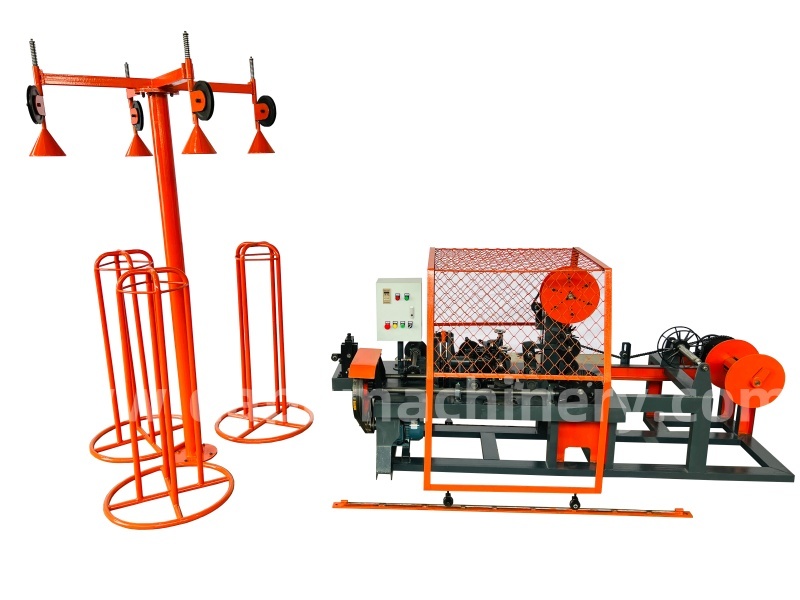
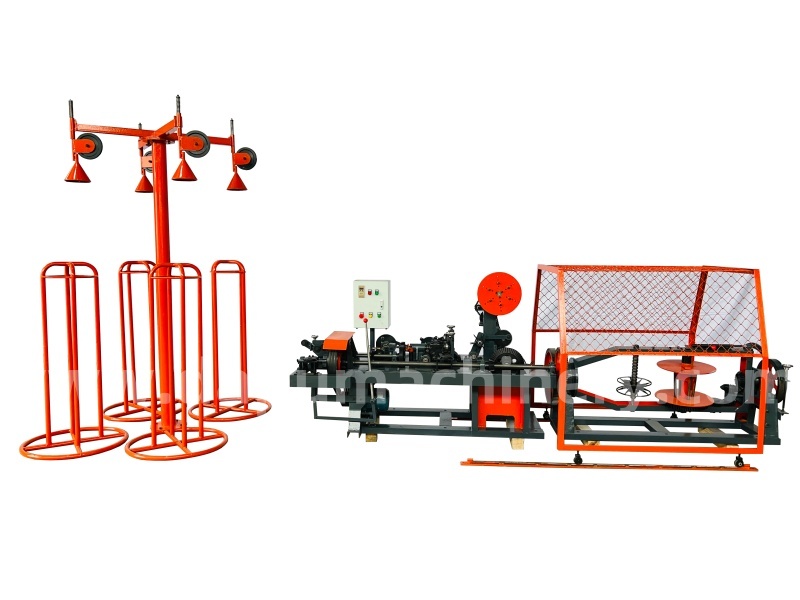
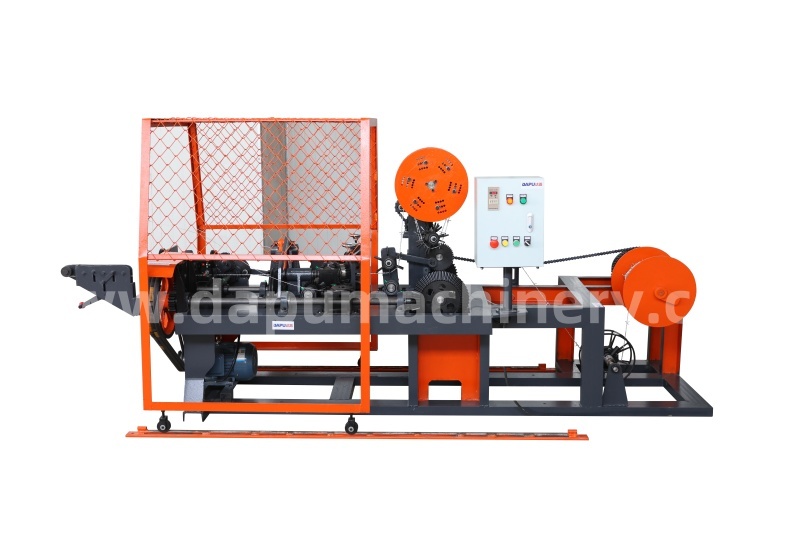
Barbed Wire Machine is made into barbed wire through a series of processes such as twisting and riveting.
The working principle of barbed wire machine
The metal wire is twisted into a spiral shape through a series of mechanical actions, and sharp barbs are twisted on the wire during the twisting process to form a barbed wire.
Types of barbed wire machines
Barbed wire machines are generally divided into ordinary barbed wire machines and high-speed fully automatic barbed wire machines. The difference is production efficiency. For example, DAPU's CS series barbed wire machines are high-speed fully automatic barbed wire machines with fast speed and fully automatic performance. It saves labor costs and improves efficiency.
Twisting methods of barbed wire machines
There are three twisting methods for barbed wire: forward twisting, reverse twisting, forward and reverse twisting. Forward twisting method: twist two or more iron wires into a double-strand iron wire rope and then wrap the barbed wire around the double-strand iron wire. Reverse twisting method: first wrap the barbed wire around the main wire (that is, a single iron wire) and then add another iron wire to twist and weave it into a double-strand barbed wire. Reverse twisting method: twisting the barbed wire in the opposite direction from where it is wrapped around the main wire. Not twisting in one direction.
The wire materials available for the barbed wire machine are low-carbon steel wire and galvanized wire.
Barbed wire machine production capacity: DAPU Barbed Wire Machine CS-A production capacity can reach 70-150kg/h, 25m/min, Barbed Wire Machine CS-B production capacity can reach 50-100kg/h, 18m/min, Barbed Wire Machine CS-C production capacity can reach 80-150kg/h, 18m/min
Barb spacing: 6 spacing sizes can be set
Barbed wire is widely used in various fields, often used for fence protection, important facility protection, prisons, military bases, airports, and other security protection.
PRODUCTS