

What do you know about chain link fencing machine?
Category:Blog
Author:
Source:
Add time:2025-03-11 09:57
In modern urban construction and industrial security, chain link fencing is widely favored for its durability, ventilation, and aesthetic appeal. From residential communities and commercial properties to industrial parks, chain link fencing is ubiquitous. The key equipment behind its efficient production is the Chain Link Fencing Machine. This article will delve into the principles, applications, advantages, and future development of this critical manufacturing tool.
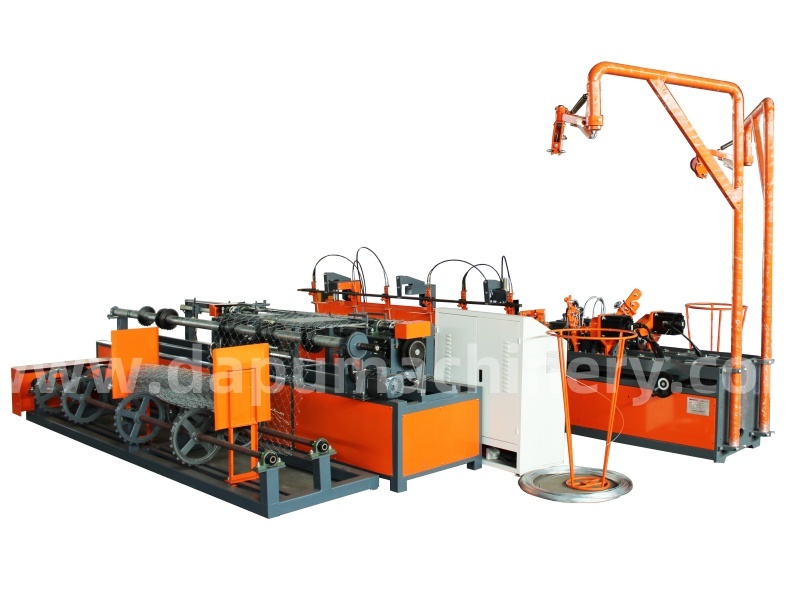
1. What is a Chain Link Fencing Machine?
A chain link fencing machine is an automated device specifically designed for producing chain link fences.
- Definition and Function: It utilizes advanced mechanical processing and weaving technology to form metal wires into a standard chain-link structure.
- Comparison with Traditional Methods: Compared to manual weaving or semi-automatic production, this machine offers higher production efficiency, lower material waste, and more consistent product quality.
- Historical Background (Optional): Since its evolution in the late 20th century, the chain link fencing machine has continuously advanced with the adoption of automation technologies, gradually achieving fully automatic production.
2. How Does It Work?
The chain link fencing machine achieves automated production through the following steps:
- Feeding: Pre-processed metal wires or coils are evenly fed into the machine.
- Weaving/Forming: Mechanical arms and twisting devices weave the metal wires into the standard chain link structure.
- Tensioning and Shaping: A tension adjustment system ensures that all parts of the fence are uniformly secured.
- Cutting and Rewinding: The finished product is precisely cut and either coiled or segmented to the required sizes.
Key components include:
- Automatic feeding system
- Weaving and twisting units
- CNC control modules
- Tension adjustment system
- Cutting and rewinding equipment
3. Applications of Chain Link Fencing
Chain link fencing produced by this machine finds applications in:
- Residential and Commercial Fencing: Providing secure and aesthetically pleasing fence solutions.
- Industrial Parks and Factories: Demarcating areas and protecting equipment.
- Sports Venues and Parks: Constructing boundaries for athletic fields and public facilities.
- Agriculture and Livestock: Securing farmland and animal enclosures to prevent livestock from straying.
4. Advantages and Limitations
Advantages:
- High Production Efficiency: Fully automated processes significantly boost production speed.
- Consistent Quality: Uniform product quality minimizes human errors.
- Material Savings: Optimized weaving processes reduce material wastage.
- User-Friendly Operation: Modern CNC systems make the machine easy to manage and adjust.
Limitations:
- High Initial Investment: The precision and automation of the equipment require a substantial initial outlay.
- Technical Expertise: Skilled personnel are needed for machine setup, calibration, and maintenance.
- Customization Constraints: Processing non-standard or complex patterns may require additional modifications.
5. Operation & Maintenance Tips
To ensure long-term stable operation of the chain link fencing machine, consider the following guidelines:
- Safe Operation: Operators should wear protective gear and strictly adhere to safety protocols.
- Regular Inspections: Focus on checking the feeding system, weaving unit, and cutting equipment for any signs of wear or debris.
- Routine Lubrication: Lubricate moving parts at prescribed intervals to prevent excessive wear.
- Troubleshooting: Address common issues such as uneven tension or cutting errors promptly to maintain efficiency.
6. Market Insights & Selection Criteria
When choosing a chain link fencing machine, consider the following factors:
- Reputable Brands: Research internationally and domestically renowned manufacturers for product quality and after-sales service.
- Production Requirements: Select the appropriate equipment based on your specific fence dimensions, production volume, and process requirements.
- Cost vs. Benefit: Weigh the equipment cost against long-term returns to select a cost-effective solution.
- Technical Support: Ensure the supplier provides comprehensive installation, commissioning, and ongoing technical support services.
7. Future Trends
As intelligent manufacturing continues to advance, the future development trends for chain link fencing machines include:
- Automation and Smart Control: Integration of AI and IoT for self-diagnosis and remote monitoring of equipment.
- Energy Efficiency and Environmental Protection: Adoption of energy-saving designs and high-efficiency transmission systems to lower energy consumption and environmental impact.
- Multi-Functional Integration: Expanding machine capabilities to combine weaving, welding, and shaping processes in one system.
- Customization and Flexible Production: Enhancing machine flexibility to meet diverse market and industry-specific customization demands.
Chain link fencing machines play a pivotal role in modern automated production. They not only significantly enhance production efficiency and product quality but also provide reliable security solutions across various industries. With ongoing technological innovations and evolving market demands, future chain link fencing machines are expected to achieve higher levels of intelligence, energy efficiency, and customization—driving industry upgrades and sustainable development.
Related News

undefined
PRODUCTS